Why Is a Power Distribution Box Important for Global Buyers?

Time:2026-10-12 Author:Ethan
0%

For international buyers, a power distribution box is more than a metal enclosure with switches. It controls how electrical power reaches machines, lighting systems, workshops, and temporary facilities. A well-designed unit can separate circuits, protect connected equipment, and make faults easier to locate. Why is a power distribution box important? It brings order to complex power demands, especially when equipment comes from different suppliers or operates across changing sites.

Experienced electrical contractors often inspect enclosure strength, cable entry design, breaker quality, grounding arrangements, and heat management before approving a unit. Clear labels matter too. Imagine a technician working inside a crowded cabinet at 6 p.m., with rain approaching and several circuits needing inspection. A readable layout can save time and reduce confusion. Small details matter.

Global buyers also need reliable technical documents, test records, wiring diagrams, and consistent production controls. Relevant certification requirements may differ by destination, so verification should happen before purchase, not after shipment. Supplier communication is equally important. Voltage, frequency, ingress protection, current rating, spare capacity, and installation conditions should be confirmed in writing. No product is perfect. A stronger evaluation still reveals weaknesses early. Some buyers focus only on price and overlook maintenance access or replacement parts. That decision may appear efficient, but it can create delays later. This guide examines the practical reasons behind power distribution boxes and the checks that support safer, more dependable purchasing decisions worldwide.
Why Is a Power Distribution Box Important for Global Buyers?

What Is a Power Distribution Box?

What Is a Power Distribution Box?

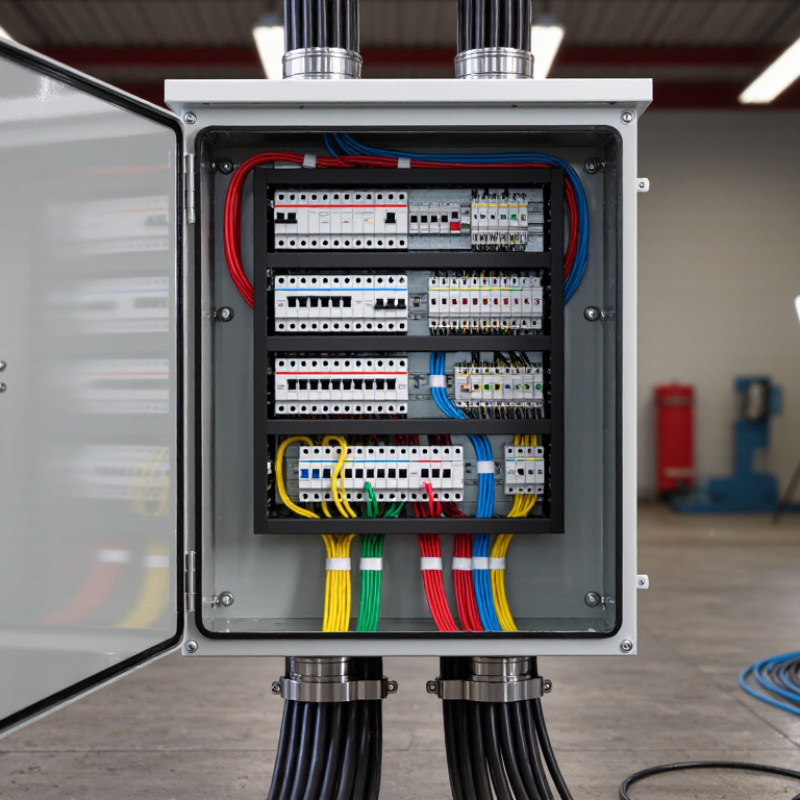
A power distribution box is an enclosed electrical unit that receives power and sends it to several circuits. It usually contains busbars, circuit breakers, fuses, terminals, and sometimes meters. These parts divide electrical current while helping protect cables and connected equipment. In practical installations, the box acts like a controlled traffic station for electricity. One incoming supply enters. Multiple outgoing circuits leave.

For global buyers, the enclosure and internal layout deserve close attention. A steel box may suit industrial rooms, while a weather-resistant enclosure fits outdoor locations. Protection ratings, operating voltage, frequency, cable entries, and heat dissipation can affect safe performance. During equipment inspections, I have seen poorly labeled terminals slow down installation and maintenance. A compact design is not always better. It may leave little space for wiring or future changes. This is easy to underestimate.

Tips: Ask for a wiring diagram, component list, dimensions, and test records before purchasing. Confirm the required voltage and current range with a qualified electrical professional. Check whether the box matches the installation environment, including dust, moisture, vibration, and temperature. Clear labels matter. So does access. A box that looks reliable may still need better cable organization. I would also review spare circuit capacity, because today’s load may not remain unchanged.

How Does a Power Distribution Box Work?

A power distribution box receives electricity from a main source and divides it into controlled branch circuits. Inside, copper busbars carry current across breakers, fuses, meters, and terminal blocks. Each breaker protects a circuit when current exceeds its safe limit. A residual-current device can also disconnect power when leakage reaches a dangerous level.

The working process is straightforward, but the details matter. Electricity enters through an isolator, passes along the busbar, then leaves through separate outgoing terminals. For example, one circuit may feed lighting, while another supplies machinery. Protective devices interrupt abnormal current within milliseconds. Earthing directs fault energy away from people and sensitive equipment. IEC 61439 requires low-voltage assemblies to undergo design verification and routine checks, supporting safer international procurement.

Demand is becoming less predictable. The International Energy Agency’s Electricity 2024 report expects global electricity demand to grow by about 4% in both 2024 and 2025. IRENA reported 473 GW of renewable capacity additions in 2023. These figures increase the need for flexible distribution equipment. A box must manage changing loads, not only today’s rating. That assumption can fail. Buyers should check rated current, short-circuit capacity, enclosure protection, heat dissipation, cable space, and local certification. A dusty workshop may need a stronger enclosure than a clean indoor panel. Qualified technicians should verify phase balance and terminal torque during installation, because a loose connection can heat quietly before protection operates.

Which Safety Features Matter to Global Buyers?

Why Is a Power Distribution Box Important for Global Buyers?

For global buyers, safety features matter more than a polished enclosure. The International Energy Agency’s Electricity 2024 report projects global electricity demand will grow by 3.4% annually through 2026. Higher loads increase heat, overload, and connection risks. A reliable power distribution box should include correctly rated circuit breakers, residual-current protection, surge protection, and clear grounding points. These features help isolate faults before damaged cables or wet surfaces become dangerous.

The enclosure also deserves close attention. Buyers should check its IP rating, impact resistance, ventilation design, and resistance to corrosion. NFPA’s Fire Loss in the United States 2023 report recorded more than 1.5 million fires and over 3,600 civilian deaths. Electrical failures are not always the only cause, but weak protection can make a fault worse. Lockable covers, permanent labels, phase identification, and accessible emergency shutoff controls improve daily operation. Compliance with IEC 61439 matters, yet paperwork alone does not prove good assembly quality.

Tips: Ask for routine test records, wiring diagrams, temperature-rise results, and protection-device settings. Confirm the box suits local voltage, frequency, climate, and installation practice. Inspect terminal tightness and cable entry seals during commissioning. Small details matter. A checklist can miss real-world misuse, so buyers should also review photographs from similar installations and question unclear claims.

Why Is a Power Distribution Box Important for Global Buyers?

Enclosure protection is a key purchasing consideration because distribution boxes may be installed in indoor, outdoor, dusty, or wet environments. The chart compares common IP codes defined by IEC 60529. Higher numbers indicate a higher specified level of protection against solid objects or water; these figures are protection-code levels, not market-share data.

How Does It Support Different International Standards?

A power distribution box must adapt to more than voltage and frequency. It must match local safety rules, installation methods, and environmental conditions. The International Energy Agency’s Electricity 2024 report expects global electricity demand to grow by an average of 3.4% annually through 2026. More cross-border projects will therefore require equipment that can move between regulatory environments without unsafe improvisation.

IEC 61439 guides the design and verification of low-voltage switchgear assemblies. IEC 60529 defines IP protection ratings against dust and water. A box rated IP65, for example, can resist dust ingress and water jets, but it is not automatically suitable for immersion. In North American projects, buyers may also request conformity with UL 508A and installation practices under NFPA 70. These references affect enclosure construction, spacing, grounding, labeling, and test records. Small details matter. A missing circuit label can delay inspection.

Field checks often reveal the same weakness: documentation is treated as an afterthought. A technically sound box may still fail approval when drawings, certificates, or short-circuit data are incomplete. The IEC 61439 verification framework requires evidence, not attractive claims. Buyers should compare rated current, withstand capacity, ambient temperature, cable entry design, and local certification requirements. No universal box exists. That assumption is convenient, but wrong. Standards also change, so a review against the destination country’s current requirements remains necessary.

How Can Buyers Choose the Right Distribution Box?

Choosing the right power distribution box starts with the site, not the product photo. Buyers should confirm supply voltage, phase type, frequency, rated current, and expected load growth. A box sized only for today may overheat when new equipment is added.

Check the enclosure carefully. Outdoor projects may need stronger protection against rain, dust, and impact. Look for a suitable IP rating, corrosion-resistant materials, secure doors, and clear cable-entry space. Inside, breakers, busbars, terminals, and protective devices should match the local electrical system. Ask for wiring diagrams, test records, installation guidance, and evidence of recognized safety compliance. Reliable documentation matters when equipment crosses borders.

Small details often decide performance. Leave spare circuit capacity. Keep cables organized. Confirm that maintenance staff can replace protective parts without dismantling the entire box. A common mistake is choosing a compact enclosure because it saves shipping space. That choice can create crowded wiring and poor heat dissipation later. Not ideal.

Buyers should also review operating temperature, altitude, humidity, transport conditions, and service access. Distribution boxes used near machinery may require stronger vibration resistance than indoor units. Compare the declared ratings with real working conditions, not ideal laboratory figures. When specifications seem vague, request clarification in writing. A cheaper option may still cost more after delays, rewiring, or failed inspections. Specification gaps deserve attention.

FAQS

How does a power distribution box work?

It receives electricity from a main source and divides it into controlled branch circuits. Copper busbars carry current internally. Breakers and fuses protect each outgoing circuit.

What happens when a circuit has excessive current?

The circuit breaker disconnects power when current exceeds its safe limit. This action can happen within milliseconds. It helps limit cable damage and overheating.

Why is residual-current protection important?

A residual-current device disconnects power when leakage reaches a dangerous level. It can reduce shock risks near wet surfaces. Correct testing remains necessary.

What safety features should buyers check?

Check circuit breakers, residual-current protection, surge protection, grounding points, and emergency shutoff access. Lockable covers and permanent labels also support safer operation.

How important is the enclosure rating?

Very important.

Which electrical specifications must buyers confirm?

Confirm voltage, phase type, frequency, rated current, and short-circuit capacity. Also review expected load growth. Today’s load may not remain stable.

Why should buyers leave spare circuit capacity?

Future machinery or lighting may increase demand. Spare capacity helps prevent crowded wiring and excessive heat. A compact box is not always better.

What documents should buyers request?

Request wiring diagrams, routine test records, temperature-rise results, protection-device settings, and installation guidance. Confirm recognized local compliance. Paperwork alone proves little.

What installation details can cause problems?

Loose terminals can heat quietly before protection operates. Technicians should verify terminal torque, cable-entry seals, earthing, and phase balance during commissioning.

How should buyers compare laboratory ratings with real conditions?

Review temperature, altitude, humidity, vibration, transport, and maintenance access. Machinery areas may require stronger vibration resistance. Ideal figures can mislead.

What is one common selection mistake?

Choosing a small enclosure only to reduce shipping space. Crowded wiring can restrict heat dissipation and complicate maintenance. That trade-off deserves reflection.

What should buyers do when specifications seem unclear?

Ask for written clarification and compare claims with real installation photographs. If answers remain vague, delay the decision. Cheap equipment may create expensive rewiring later.

Conclusion

A power distribution box is a central electrical enclosure that receives incoming power and safely distributes it to multiple circuits, machines, or work areas. It typically includes protective devices such as circuit breakers, fuses, isolators, grounding systems, and overload protection. Understanding how power enters the box, passes through protective components, and reaches connected equipment helps buyers evaluate reliability, efficiency, and maintenance needs. This explains why is a power distribution box important for global buyers seeking stable and organized power management.

For international applications, buyers should pay close attention to safety features, enclosure strength, weather resistance, cable access, capacity, and ease of inspection. The box should also be designed to support the voltage, frequency, wiring methods, and certification requirements relevant to its destination market. By comparing load demand, environmental conditions, installation location, expansion needs, and documentation, buyers can select a distribution box that provides dependable performance, improved safety, and compatibility with different international standards.

Ethan

Ethan

Ethan is a seasoned marketing professional with a deep expertise in our company's innovative product line. With a passion for sharing knowledge and insights, he takes the lead in regularly updating our corporate blog, where he explores industry trends, product features, and effective marketing......