Choosing a power distribution box for an international project is not simply a matter of comparing prices. The wrong enclosure can overheat, admit moisture, complicate maintenance, or conflict with local electrical requirements. This guide explains how to choose a power distribution box with practical field conditions in mind. Voltage, frequency, phase configuration, rated current, short-circuit withstand capacity, and connection type must match the project’s actual load. Do not rely on a familiar model alone.
Electrical safety educator Mike Holt emphasizes, “Safety is not an option; it is a design requirement.” That principle matters when selecting boxes for construction sites, events, factories, and temporary installations. Look for suitable ingress protection, durable materials, clear labeling, reliable circuit protection, and accessible isolation devices. Certification requirements may differ between regions, so engineers should verify applicable standards before ordering. A box accepted in one market may require additional assessment elsewhere.
Real conditions can expose weak decisions quickly. A dusty site, heavy rain, long cable runs, or frequent relocation changes the selection. A compact box may fit the drawing but leave insufficient space for heat dissipation and cable bending. That is easy to overlook. Review load diversity, future expansion, grounding arrangements, and replacement-part availability with qualified personnel. Product documentation should be specific, current, and traceable. Even experienced teams can miss a small detail, such as incompatible frequency ratings or undersized terminals. Careful review reduces those risks and supports safer, more dependable global deployment.
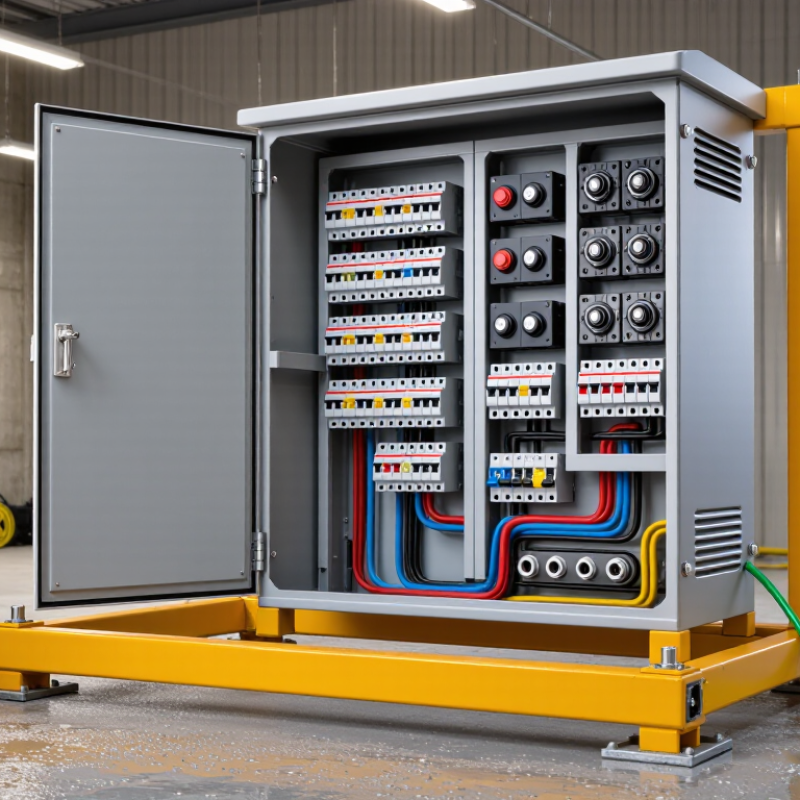
Start with the site. Before comparing power distribution boxes, document the project’s actual electrical conditions. Record the supply voltage, frequency, phase arrangement, load capacity, and expected fault current. Also identify motor loads, temporary equipment, sensitive controls, and future expansion needs. A box sized only for today’s demand may become a restriction later.
Global projects require careful local verification. Check the destination country’s electrical codes, inspection rules, grounding method, cable types, and approved ingress protection level. Outdoor sites may face rain, dust, salt air, vibration, or extreme temperatures. The enclosure, connectors, circuit protection, and labeling must match these conditions. I have seen neat load schedules fail because starting currents were underestimated. That detail matters.
Tips: Create a simple load table with equipment name, rated power, starting current, operating hours, and location. Mark essential and non-essential circuits separately. Ask a qualified electrical engineer to review diversity factors and protection coordination. Keep it practical. Leave spare capacity, but avoid paying for unnecessary hardware. Recheck every assumption with the site team, because drawings can be outdated or incomplete. Clear documentation should include wiring diagrams, terminal layouts, test records, and maintenance access requirements.
How to Choose a Power Distribution Box for Global Projects?
Compare Voltage, Frequency, and Phase Standards Worldwide
A power distribution box must match the project’s incoming voltage, frequency, and phase arrangement. A 120 V, 60 Hz supply is common in North America, while many regions use 230 V, 50 Hz systems. Industrial sites may receive 400 V three-phase power, often with a neutral conductor. These differences affect breakers, transformers, meters, cables, and connected equipment.
Check the utility data before reviewing the enclosure. Do not rely only on a country label. A project may use 208 V three-phase power in one building and 480 V in another. Confirm line-to-line and line-to-neutral voltage separately. Then verify whether the system is single-phase, split-phase, or three-phase. Frequency also matters for motors, timers, generators, and some control devices. Small errors can become expensive failures.
Field inspections often reveal a simple mistake: the box matches the voltage but not the phase sequence. That can reverse motor rotation or interrupt production. Request the site’s latest electrical drawings and measure the supply with qualified personnel. Check tolerance ranges, fault current, earthing method, and local inspection requirements. I would also leave spare capacity, although estimating future loads is rarely perfect. A practical design may include clearly labeled outlets, lockable access, weather protection, and separate circuits for sensitive equipment. The final specification should be reviewed against the actual site conditions, not copied from an earlier project.
Compare Voltage, Frequency, and Phase Standards Worldwide
The chart compares representative nominal three-phase industrial supply systems. Voltage and frequency must match the distribution box, connected equipment, and protection devices. Local variations exist, so always confirm the utility specification before selecting equipment.
For global projects, a power distribution box should be judged by more than voltage and enclosure size. Safety certification is the first practical filter. Check whether the product carries marks recognized in the destination market, not merely certificates accepted in its manufacturing country. Review the certificate number, issuing body, product scope, and testing standard. A familiar logo can still hide an outdated approval. This is easy to miss.
Regional compliance also covers wiring rules, grounding methods, cable glands, ingress protection, and temperature limits. A box installed near a coastal construction site may need stronger corrosion resistance than one used indoors. In Europe, documentation may need to support applicable low-voltage and electromagnetic compatibility requirements. In North America, local authorities may expect different enclosure ratings, conductor arrangements, or inspection records. Ask for test reports and declarations before shipping. Keep the evidence together. Digital copies help, but controlled revisions matter more. Confirm the exact model, accessories, and factory configuration listed in each document. Substituting a breaker later can invalidate the original assessment.
Field reviews often expose gaps that brochures do not. A project review once revealed a delay caused by a missing local-language warning label, not a technical failure. That detail changed the handover schedule. Build a compliance checklist with the installer, engineer, and local inspection authority. Verify clearances, lockout access, spare parts, and emergency isolation points during a pre-shipment review. Do not assume one certificate covers every country. It may not. Requirements can change during a long project, so recheck them before installation and commissioning. A careful choice combines certified safety, regional fit, traceable documents, and honest review of remaining uncertainty.
Start with the enclosure, because the box must survive its actual environment. Indoor construction sites may need basic dust protection, while outdoor installations face rain, sunlight, mud, and impact. Select an appropriate IP rating and consider an IK rating where tools or equipment may strike the housing. Stainless steel, coated steel, and reinforced polymer each suit different conditions. Check cable entries carefully. Poorly sealed glands can undermine an otherwise strong enclosure.
Capacity requires more than adding connected load values. List every outlet, motor, heater, and temporary tool. Calculate continuous demand, starting current, phase balance, and future expansion. Then apply derating for high temperatures, grouped cables, altitude, and limited ventilation. Leave practical spare capacity. It is tempting to size the box tightly to reduce cost, but that decision often creates heat and maintenance problems.
Protection features should match both the equipment and local requirements. Include suitable circuit breakers, residual-current protection, overvoltage protection, and a clear earthing arrangement when applicable. Lockable covers, labelled circuits, emergency isolation, and visible status indicators improve daily safety. Verify voltage, frequency, plug types, short-circuit ratings, and test procedures with a qualified local professional. Field conditions are rarely perfect. A design can look correct on paper and still fail because the enclosure is difficult to open with gloves.
Choosing a power distribution box for a global project requires more than checking voltage and current. Verify the installation environment first. Confirm the system voltage, frequency, fault level, earthing method, cable entry, and enclosure rating. IEC 61439-1 and IEC 61439-2 require design and routine verification for low-voltage assemblies. Site teams should also check heat, dust, moisture, altitude, and working clearance. A factory certificate is useful, but it cannot replace a site inspection.
Logistics can quietly undermine a technically sound selection. The World Bank’s 2023 Logistics Performance Index assessed 139 countries and highlighted major differences in customs, infrastructure, and delivery reliability. Specify packed dimensions, lifting points, spare parts, customs documents, and shock protection before shipment. Keep critical components locally where possible. Small delays matter. I have seen projects lose days because a replacement breaker lacked the correct certification or terminal arrangement.
Maintenance planning should begin before installation. Provide wiring diagrams, torque values, inspection intervals, test procedures, and clearly labeled spare parts. NFPA 70B, issued as a standard in 2023, emphasizes documented electrical maintenance programs, although local rules may differ. Supplier support should include remote troubleshooting, multilingual manuals, commissioning guidance, and response-time commitments. Uptime Institute’s 2024 Annual Outage Analysis reported that 54% of respondents experienced a serious outage costing more than 100,000 dollars. That figure deserves attention. Yet support promises are often too vague, and buyers should test them with a realistic technical question before signing.
Voltage affects breakers, transformers, meters, cables, and connected equipment. A 120 V system differs greatly from a 230 V system. Small errors matter. Confirm line-to-line and line-to-neutral voltage separately.
Frequency influences motors, timers, generators, and control devices. Many regions use 50 Hz, while others commonly use 60 Hz. Check the actual utility data. Do not rely only on the country.
Identify whether the supply is single-phase, split-phase, or three-phase. Confirm the phase sequence on site. A wrong sequence may reverse motor rotation. That can interrupt production.
One building may receive 208 V, while another uses 480 V. Request the latest electrical drawings and site measurements. Earlier project files may be outdated. Copying them can cause expensive failures.
Review certificates, test reports, declarations, and issuing-body details. Confirm the exact model and factory configuration. Keep records together. A certificate from one region may not satisfy another region’s requirements.
Check wiring rules, grounding methods, cable glands, enclosure ratings, and temperature limits. Local authorities may require different inspection records. Requirements can change during long projects. Recheck them before installation.
A coastal site may need stronger corrosion resistance than an indoor location. Weather protection and suitable ingress protection are important. Consider heat, moisture, dust, and exposure. Brochures may not show every field condition.
Clearly labeled outlets, lockable access, and separate sensitive-equipment circuits improve daily use. Include emergency isolation points and proper clearances. Leave spare capacity when possible. Future loads are difficult to predict perfectly.
Choosing the right equipment for an international construction, industrial, or event project begins with understanding how to choose a power distribution box based on actual power requirements. Define the expected load, number of circuits, operating environment, and future expansion needs before comparing voltage, frequency, and phase standards in each destination. Confirm that the selected unit can work safely with local electrical systems and compatible equipment.
Safety and regional compliance are equally important. Review applicable certifications, grounding arrangements, overload protection, residual-current protection, and short-circuit performance. Select an enclosure with suitable capacity, ingress protection, durability, and portability for the installation site. Before purchase, verify connection methods, installation procedures, transportation requirements, spare parts availability, maintenance access, and technical support. A dependable supplier should provide clear documentation, responsive assistance, and practical solutions for local conditions. This structured evaluation helps reduce installation delays, improve operational safety, and ensure reliable power distribution throughout the project lifecycle.

SN Electrical