How to Choose Power Distribution Box Types in 2026?

Time:2026-10-27 Author:Ethan
0%

Choosing a power distribution box in 2026 requires more than comparing price and enclosure size. Electrical loads are changing quickly. Solar systems, battery storage, electric vehicle chargers, construction tools, and sensitive control equipment demand different protection strategies. A box installed beside a dusty generator may need different features from one serving a clean indoor workshop.

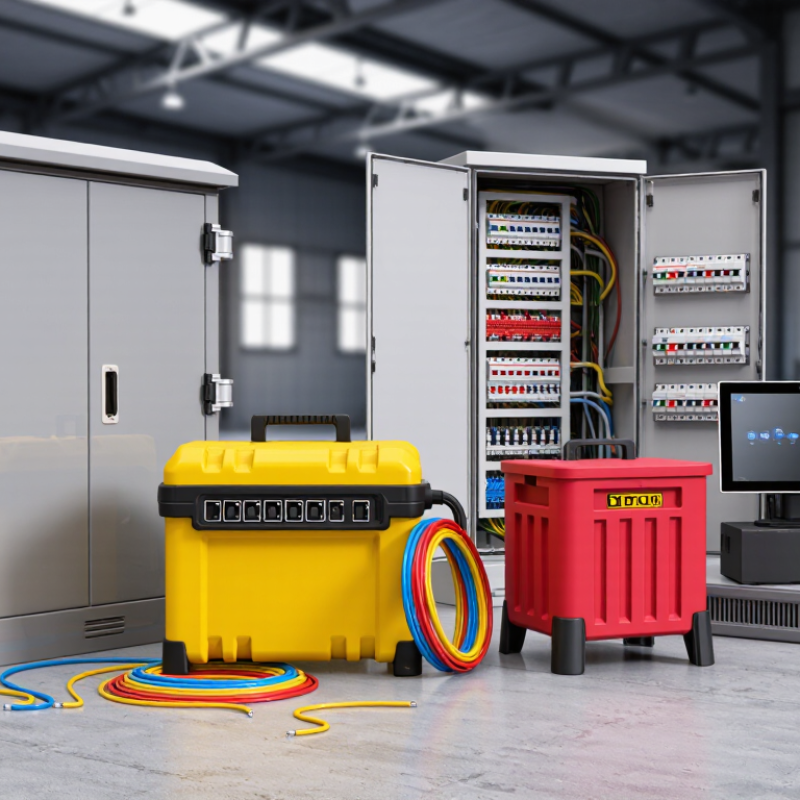
Many buyers begin with a simple question: what are the different types of power distribution boxes? The answer includes portable distribution boxes, temporary site boxes, weatherproof outdoor units, industrial panels, modular systems, and smart monitoring boxes. Each type has practical strengths and limitations. A portable unit may support fast deployment, yet its sockets can become crowded during peak use. A smart box can provide useful load data, but its communication features may add maintenance requirements.

Real-world selection should consider voltage, current, phase configuration, circuit quantity, ingress protection, grounding, cable entry, and fault protection. Look closely at the environment. Rain, concrete dust, heat, vibration, and accidental impact can shorten service life. Safety remains central. Components should be selected according to applicable regional standards and verified by qualified electrical professionals.

Small details matter.

For example, a site box with clear labels reduces connection errors during a rushed shift. A lockable enclosure may protect circuits from unauthorized access. However, no single design fits every project. Specifications can also change after installation begins. Reviewing the expected load, future expansion, inspection requirements, and maintenance access helps prevent expensive replacement. This guide examines the main power distribution box types and explains how to match them with practical operating conditions in 2026. Some assumptions may still need testing on site.

How to Choose Power Distribution Box Types in 2026?

Understanding Power Distribution Box Functions and Applications

How to Choose Power Distribution Box Types in 2026?

A power distribution box receives electricity and divides it into controlled outgoing circuits. Its core functions include protection, isolation, switching, metering, and safe connection. Inside, circuit breakers respond to overloads and short circuits. Busbars distribute current across multiple feeders. Clear labels help technicians identify circuits during maintenance.

The application determines the box type. A temporary construction box needs strong enclosures, reliable sockets, and easy relocation. An outdoor unit requires suitable resistance against rain, dust, and sunlight. Industrial facilities may need metal housings, higher fault ratings, and space for control devices. Portable boxes support events, workshops, and emergency power arrangements. Size matters. An oversized box wastes space, while a crowded one complicates heat control and inspection.

Modern systems increasingly use meters, remote status signals, and modular protection. These features can reveal unusual loads before equipment overheats. However, smart functions cannot replace correct installation or routine testing. Field inspections often find loose terminals, unclear labels, and overloaded extension circuits. Small details matter.

Choose according to voltage, current, fault level, environment, ingress protection, and future expansion. Check local electrical rules and qualified inspection requirements before installation. A box may look suitably rated but still fail in harsh conditions. That mistake is easy to make. Recheck cable entries, grounding paths, ventilation, and access clearance. The first choice is not always the safest choice.

Comparing Power Distribution Box Types and Configurations

Choosing a power distribution box in 2026 requires more than checking current capacity. The box type must match the site, load pattern, protection needs, and maintenance routine. Portable boxes suit temporary work areas and event power. Wall-mounted boxes fit workshops and fixed equipment. Floor-standing cabinets provide more space for large feeders, meters, and future circuits.

Configuration matters just as much. A basic unit may contain circuit breakers, neutral bars, and grounding terminals. Advanced versions can add surge protection, residual-current protection, phase monitoring, and remote energy measurement. Outdoor installations need weather-resistant enclosures, sealed cable entries, and corrosion-resistant hardware. Indoor units may prioritize compact dimensions and easy access. However, a high protection rating does not replace correct installation.

In field inspections, I check cable routing, breaker labeling, ventilation, and available spare capacity. Small details prevent delays. A box with only one unused circuit may become restrictive after a machine upgrade. I once saw a well-built enclosure fail operationally because its terminals were too crowded. The design looked efficient. It was not. Heat buildup, awkward testing, and unclear labels increased service time. Load calculations should include starting current, diversity, fault levels, and local electrical requirements. Engineers should also verify enclosure temperature and short-circuit ratings before approval. When conditions change, the original configuration deserves another review.

Matching Voltage, Current, and Circuit Needs

How to Choose Power Distribution Box Types in 2026?

Choosing a power distribution box in 2026 starts with electrical facts, not enclosure appearance. Match the box voltage rating with the system’s nominal voltage and transient conditions. A 400-volt system needs suitable insulation, clearances, and protective devices. Never select only by the highest expected voltage.

Current demand requires closer attention. Add the continuous loads, then consider motor starting surges, heaters, chargers, and future equipment. Check the main breaker, busbar, terminals, and outgoing breakers together. The weakest component limits the safe capacity. Circuit count also matters. A workshop may need separate circuits for lighting, tools, ventilation, and emergency equipment. In field inspections, crowded terminals often create heat and maintenance problems. A neat box can still be wrong.

Tips: Record every load in a simple table. Include voltage, running current, startup current, phase, and cable size. Leave roughly 20% spare capacity when practical. Select an enclosure suitable for dust, moisture, and indoor or outdoor exposure. Verify short-circuit ratings and local electrical requirements with a qualified professional. Test voltage and temperature after installation. Do not rely on labels alone. Real loads can differ from design estimates, and that mistake deserves review.

How to Choose Power Distribution Box Types in 2026?

Match the distribution box to the nominal voltage, continuous current demand, and number of outgoing circuits. The values below represent common low-voltage distribution configurations; final selection must be verified against local electrical codes, available fault current, load calculations, and installation conditions.

Selection guide: Use single-phase systems for smaller residential and light-commercial loads. Three-phase 208Y/120 V systems are common in commercial buildings, while 480Y/277 V systems are typically used for larger commercial and industrial distribution. Higher current ratings and circuit counts generally require larger enclosures, stronger busbars, and more advanced overcurrent protection.

Evaluating Safety, Environmental, and Installation Requirements

How to Choose Power Distribution Box Types in 2026?

Evaluating Safety, Environmental, and Installation Requirements

Choosing a power distribution box starts with the site, not the product catalogue. During site reviews, inspect expected current, fault levels, cable sizes, and available space. A box with an appropriate enclosure rating helps resist dust and water. Indoor workshops may need less protection than outdoor construction areas. Coastal locations require stronger corrosion resistance. Hot equipment rooms need careful temperature planning.

Safety details deserve close attention. Look for secure covers, proper grounding points, clear circuit identification, and enough room for maintenance. Residual-current protection may be necessary where moisture or portable equipment creates additional risk. Always confirm local electrical requirements with a qualified professional. I have seen installations fail because cable bends were ignored. The box was technically suitable, but access became awkward.

Tips: Measure the wall or floor area before selection. Leave working clearance around doors and cable glands. Check whether future circuits can be added safely. Choose materials that support the site’s environmental goals, such as recyclable metal or durable low-maintenance components. Avoid choosing the highest rating automatically. It can increase cost and installation effort without improving performance. A careful review is better, although real projects rarely fit perfectly. Recheck drawings against the actual site before ordering.

How to Choose Power Distribution Box Types in 2026? - Evaluating Safety, Environmental, and Installation Requirements

A practical comparison of power distribution box configurations for industrial, commercial, construction, and special-purpose installations

Power Distribution Box Type Typical Application Safety and Protection Requirements Environmental Conditions Typical Enclosure Protection Installation Requirements Key Selection Considerations
Indoor Fixed Distribution Box Electrical rooms, offices, retail buildings, workshops, and dry industrial areas Overcurrent protection, short-circuit protection, grounding, neutral segregation where required, and protection against accidental contact with live parts Clean and dry indoor locations with limited dust, condensation, impact, and chemical exposure IP30–IP40 is commonly suitable for controlled indoor locations Mount on a stable wall or frame; provide working clearance, cable support, circuit identification, and access for inspection and maintenance Choose based on incoming voltage, short-circuit current rating, number of outgoing circuits, available space, and local electrical code requirements
Outdoor Weatherproof Distribution Box Outdoor utilities, agricultural sites, building services, parking areas, and external equipment Residual-current protection may be required for personnel protection; use suitable overcurrent devices, grounding, weather-resistant cable entries, and lockable access where needed Rain, ultraviolet exposure, temperature changes, condensation, dust, and occasional hose-directed water IP55–IP66, depending on exposure; IP rating must apply to the complete installed assembly Use a corrosion-resistant enclosure, sealed cable glands, drainage or anti-condensation measures where appropriate, and a mounting method that prevents water pooling Confirm UV resistance, corrosion resistance, temperature range, enclosure material, door sealing, and protection against direct sunlight and wind-driven rain
Construction Site Distribution Box Temporary power for construction, renovation, civil engineering, and infrastructure projects High sensitivity residual-current protection is commonly required for socket outlets; use robust grounding, mechanical protection, emergency isolation, and clearly marked circuits Dust, mud, rain, vibration, impact, rough handling, and frequent relocation IP54 minimum is commonly used for protected outdoor temporary equipment; higher protection may be needed in exposed areas Use heavy-duty flexible cables, strain relief, protected connectors, stable supports, and regular inspection; keep equipment away from standing water and vehicle routes Prioritize mechanical strength, portability, socket configuration, residual-current testing, cable durability, and ease of inspection over compact size alone
Portable or Event Distribution Box Events, filming, exhibitions, mobile workshops, maintenance operations, and temporary power systems Protective earthing, overcurrent protection, residual-current protection where required, touch-safe components, and clear circuit labeling Variable indoor or outdoor conditions, repeated transport, vibration, dust, and occasional moisture IP44–IP65, selected according to whether the unit is used indoors, outdoors, or in wet areas Provide handles or lifting points, secure cable entries, adequate ventilation, stable placement, and protection against unauthorized reconnection Check total connected load, diversity factor, inlet and outlet connector compatibility, transport durability, noise, weight, and available protective devices
Industrial Heavy-Duty Distribution Box Factories, manufacturing lines, processing areas, warehouses, and high-load machinery zones Short-circuit withstand capability, selective protection, reliable grounding, isolation facilities, motor or equipment protection, and suitable internal clearances Industrial dust, vibration, heat, oil mist, moisture, and possible chemical contamination IP54–IP66; the required rating depends on dust, water, cleaning methods, and process conditions Use rigid mounting, segregated wiring, appropriately rated cable glands, thermal management, inspection access, and coordination with upstream protection Verify rated current, prospective short-circuit current, heat dissipation, enclosure material, fault coordination, and compatibility with industrial control systems
Stainless-Steel Hygienic Distribution Box Food processing, beverage production, pharmaceutical facilities, laboratories, and washdown areas Use devices and materials suitable for the process environment; prevent liquid ingress, contamination traps, exposed cable damage, and inaccessible residues Frequent washdown, humidity, cleaning chemicals, condensation, and hygienic-control requirements IP65–IP69K may be selected for severe washdown conditions, subject to the equipment and installation design Use sloped or cleanable surfaces, hygienic cable glands, suitable seals, corrosion-resistant hardware, and installation methods that avoid dirt or water traps Consider cleaning pressure and temperature, chemical compatibility, surface finish, gasket material, drainage, and the difference between IP testing and hygienic design
Hazardous-Area Distribution Box Locations where flammable gas, vapor, liquid, mist, or combustible dust may be present Must use equipment with the correct hazardous-location or explosive-atmosphere certification; protection method, temperature class, gas or dust group, and zone classification must match the area Potentially explosive atmospheres, dust layers, corrosive agents, temperature extremes, and process-related vibration IP rating is only one requirement; certified explosion-protection construction and correct ingress protection are both necessary Installation must follow the applicable hazardous-area standard, certified cable-entry method, bonding rules, equipment spacing, and inspection requirements Do not select by enclosure IP rating alone; confirm area classification, substance type, equipment protection level, ambient temperature, certification, and maintenance procedures
Marine or Coastal Distribution Box Ports, offshore support areas, vessels, coastal facilities, and salt-laden outdoor installations Use protection against electric shock, short circuit, earth faults, vibration, and corrosion; marine approvals may be required for vessel applications Salt spray, high humidity, condensation, vibration, wind, ultraviolet exposure, and rapid temperature changes IP56–IP66 is commonly considered for exposed locations, subject to the specific installation and equipment requirements Use corrosion-resistant materials, sealed cable entries, vibration-resistant fasteners, equipotential bonding, and secure mounting against movement Evaluate salt-spray resistance, galvanic corrosion, enclosure material, cable flexibility, vibration testing, drainage, and any applicable marine rules
Modular Panelboard or Switchboard Commercial buildings, data facilities, campuses, industrial plants, and systems requiring future expansion Use coordinated circuit breakers, busbar protection, isolation, grounding, barriers, labeling, and an assembly design verified for its intended fault level Usually installed indoors, although outdoor-rated assemblies are available when correctly specified IP30–IP54 for many indoor assemblies; higher protection is required for exposed or contaminated environments Requires planned cable routes, adequate floor or wall support, working space, heat dissipation, access for testing, and spare capacity for future circuits Best for scalable systems; check busbar rating, fault withstand, compartmentalization, expansion space, metering needs, and maintenance access

Selection note: IP codes describe protection against solid objects and water ingress, but they do not by themselves confirm electrical safety, impact resistance, corrosion resistance, hygienic suitability, or hazardous-area compliance. Final selection should be verified against the applicable national electrical code, installation standard, equipment ratings, fault level, ambient temperature, and site risk assessment.

Selecting a Reliable Power Distribution Box for 2026 Projects

How to Choose Power Distribution Box Types in 2026?

Selecting a reliable power distribution box starts with the project’s actual electrical load. Record voltage, phase, current, fault level, and expected expansion. Do not size the box only for today’s equipment. A small reserve can prevent expensive replacement later.

I have seen installations fail because cable routes and heat were treated as minor details.

Choose an enclosure suitable for the environment. Indoor construction areas may need basic protection, while outdoor or washdown locations require stronger ingress protection. Check the enclosure rating, operating temperature, corrosion resistance, and cable-entry design.

Confirm that breakers, fuses, terminals, and busbars match the required current. Short-circuit withstand capacity matters too. Ask for test reports, wiring diagrams, material data, and applicable safety certifications.

Modern projects may benefit from metering, remote status signals, and modular outgoing circuits. These features improve maintenance, but they also add failure points. Keep the interface clear for technicians wearing gloves. Leave enough space for safe inspection and future rewiring.

Grounding must be visible, secure, and tested before energizing. I once preferred the most compact option, but later found maintenance access poor. That choice needed reconsideration.

A dependable box is not merely compact or advanced. It should fit the site, the load, the people, and the inspection routine.

FAQS

How should I choose a power distribution box for a temporary work area?

A portable box usually suits temporary sites, events, and changing equipment locations. Check voltage, phase, current, fault level, and cable length before selection. Leave room. The box must remain stable and protected during use.

When is a wall-mounted distribution box appropriate?

Wall-mounted boxes fit workshops and fixed equipment with predictable cable routes. They save floor space and keep controls visible. Confirm wall strength, service clearance, ventilation, and safe cable entry before installation.

Why might a floor-standing cabinet be a better choice?

Floor-standing cabinets provide space for large feeders, meters, and future circuits. They suit projects with several outgoing circuits or planned expansion. A larger cabinet can simplify testing, but unused space alone does not guarantee good design.

What protection features may a distribution box need?

Basic units may include breakers, neutral bars, and grounding terminals. Advanced configurations can add surge protection, residual-current protection, phase monitoring, and energy measurement. Each feature adds value and possible failure points, so choose only useful functions.

What enclosure requirements matter for outdoor installations?

Outdoor boxes need suitable ingress protection, sealed cable entries, and corrosion-resistant hardware. Check operating temperature and resistance to rain, dust, and washing activities. A high protection rating cannot correct poor installation.

How much spare capacity should a distribution box include?

Include practical space for future circuits and possible machine upgrades. One unused circuit may be insufficient later. Reserve capacity should consider cable routes, terminal space, heat, and expected load growth.

What load information should engineers check before approval?

Record voltage, phase, operating current, starting current, diversity, fault level, and short-circuit requirements. Verify breaker, fuse, terminal, and busbar ratings. The starting current may change the final selection.

What maintenance details are easy to overlook?

Inspect cable routing, breaker labels, ventilation, grounding, and access for testing. Terminals should not be crowded. I once favored a compact design, but maintenance access was poor. That choice needed reconsideration.

Conclusion

Choosing the right power distribution box in 2026 begins with understanding how it will be used, where it will be installed, and what equipment it must support. The question “what are the different types of power distribution boxes” can be answered by considering portable, fixed, indoor, outdoor, single-phase, three-phase, temporary, and modular configurations. Each type is designed for different applications, from construction sites and events to industrial facilities, commercial buildings, and infrastructure projects.

Before making a selection, compare the required voltage, current capacity, number of circuits, connection methods, and expansion options. Safety features such as circuit protection, grounding, overload prevention, weather resistance, enclosure strength, and ease of maintenance are equally important. Environmental conditions, installation space, cable routing, mobility, and compliance with applicable electrical standards should also guide the decision. A reliable power distribution box should provide stable performance, practical installation, clear circuit identification, durable construction, and sufficient capacity for both current demands and future project needs.

Ethan

Ethan

Ethan is a seasoned marketing professional with a deep expertise in our company's innovative product line. With a passion for sharing knowledge and insights, he takes the lead in regularly updating our corporate blog, where he explores industry trends, product features, and effective marketing......